I write a lot of smart contracts. Apparently I have deployed >3000 on Ethereum. So I come by the moniker /Smart Contract Dev/ honestly.
 ross.wei@z0r0zzz · Jun 3, 2026
 9 replies · 60 likesView on X
Ethereum makes this simple to do. It is designed to host these kinds of persistent programs and let you pay to interact with them with ether (gas). If you want to lock some funds on the internet and have computers drive the deal and want optionality and not get rugged by counterparties, Ethereum is your playground. And anyone can do it without asking anyone else. In other words it is purpose-built for deploying and running smart contracts from anywhere and at anytime out of first principles. And the culture prioritizes decentralization over speed (based).
See Vitalik Buterin's In Defense of Bitcoin Maximalism, where he says succinctly the role of crypto in a dangerous world, is "to be a light that does [what] it needs to do when you're facing the toughest challenge of your life", and on good forms of intolerance, "it's better to make your protocol too simple and fail to serve ten low-value short-attention-span gambling applications than it is to make it too complex and fail to serve the central sound money use case that underpins everything else." Many people who care about the core utility of smart contracts will resonate with these ideals, which are practical in a world where "shit hits the fan" pretty much every week and it feels like the rules of the game are constantly changing under your feet.

Bitcoin in comparison to Ethereum I think is still grossly misunderstood in its own latent smart contract-like capabilities even while Ethereum was mainly pitched as bitcoin-plus-smart-contracts to start. And where complexity currently is being tested as an attack vector for AI agents that work 24/7 365, Bitcoin can be an attractive medium to anchor mission-critical code. It is not like Ethereum in terms of expressiveness, and was not purpose-built for running arbitrary programs on the blockchain. It is a "Bob pays Alice" chain. But yet surprisingly Bitcoin has many built-in tools that approximate Ethereum smart contracts that have been added deliberately since genesis. Or are stand-in replacements. There are also interesting albeit 'hacky' things you can do with Bitcoin metadata to push the envelope even further to build things like confidential AMMs on top (part 3 in this series will go into these meta constructions on @tacitfi inspired by things like ordinals and runes).
And a more tangible solution is being discussed in "covenants" to more directly accomplish smart contracts. End of the day, the astute observer might see that less is more, and when it comes to immutable financial transactions, code that is baked into a blockchain to perform specific and routine operations can often be preferable than sanity checking 'arbitrary scripts' that your livelihood might compose with.
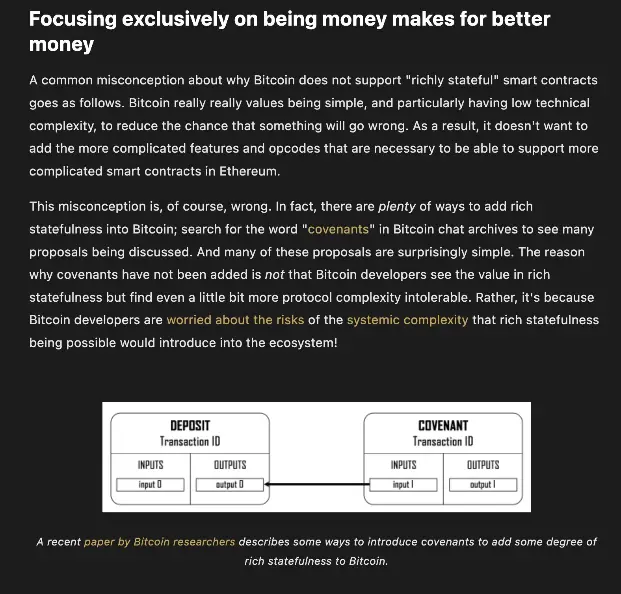
I will start with the baked "built-in tools" around Bitcoin contracts pre-covenants and show a couple compositions in this first article as part of a series, focusing today on Self-Custody through multisigs and their extensions.
What I think could be stressed is that after about a decade of emergent and market-driven applications on Ethereum, the smart contracts people actually care about are actually pretty few (let's be real, it is swap, conditional send and vault). And the most important smart contract use cases are those that accomplish the core purpose of using blockchains in first place, rather than cheaper and faster alternatives: Protect assets and maintain user self-custody without retreating back to the legacy financial system.
 DelCrxpto@DelCrxpto · Oct 29, 2026
- BINANCE - $3.5 BILLION
- BYBIT - $1 BILLION
- BITGET - $1 BILLION
- SWYFTX - $10 MILLION
- KuCoin - N/A
In case you missed it, there was quite a ... kerfuffle the other day with Binance getting a hot wallet hacked to the tune of ~6 billion dollars. If they had used better self-custody programs, on Ethereum, and on Bitcoin, this might not have happened or at least would have taken a lot more effort on the part of the attackers. (We should make it harder to spend coins when you hold more of them. This is my opinion but I think it is quite normal.)
 Pete Kim@petejkim · Oct 29, 2026
But the essential idea here is that a combination of Bitcoin script, spending conditions, and signatures can accomplish a lot for decentralized finance (DeFi) use cases already if developers care to build with them. Education is key here and I hope I can bring others up to speed to where I am so far in my journey(manning) building on both networks. What matters at the end of the day is what you can do on a blockchain, its distribution, and its security guarantees.
From my humble, more outsider POV on Bitcoin development and culture, I see an admirable insistence of simplicity, but also a dogheaded refusal to use more expressive Bitcoin logic to its full potential, leading to a bizarre level of trusted custodians in this space to hold people's coins in order to keep them or try DeFi applications. (Let the people have cake, and eat it too!)
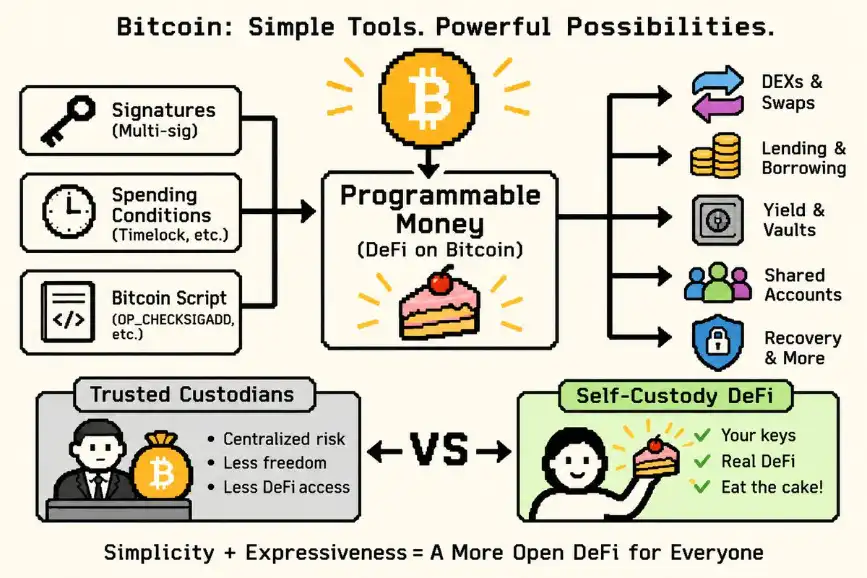
In this lane I subscribe to perhaps a new breed of maximalism centered on the duality of Bitcoin and Ethereum as competing-while-complimentary machines that broadly share the same underlying beliefs and culture, with all roads ultimately leading to DeFi where you can be your own bank and not explode.

I believe that we should maximize the use cases that Ethereum uniquely provides, engage with Bitcoin users by translating DeFi concepts where it makes sense for them, bridge Bitcoin assets to Ethereum to enjoy more programming options (and to have better tokens to trade), and leverage Bitcoin mainly where it accomplishes the same thing with better security. As you will learn as you build, it's not exactly the smoothest or best UX to program with Bitcoin (it is slow), but it does exist, and you should add it to your toolkit as a smart contract dev.
So I think smart contract devs like me can discard with blockchain tribalism for now on systems that actually serve our purpose (you will realize the loudest voices that want ETH vs BTC are some of the most useless actors in the ecosystem) and consider the tools at hand and get to work at increasing freedom in software and financial applications generally: Ethereum as a "independent tech protocol stack" not beholden to a technical roadmap of being money, and Bitcoin focused on its monetary use cases, but still pulled forward by the needs of the network and its users particularly on programmable self-custody (tbh I don't even think of Ethereum as exclusively a blockchain thing anymore). But I digress.
So let's begin at the basics. What does Bitcoin offer ordinary and non-technical people to trustlessly secure their assets on their own today?
Bitcoin Multisigs - OP_CHECKMULTISIG / OP_CHECKSIGADD
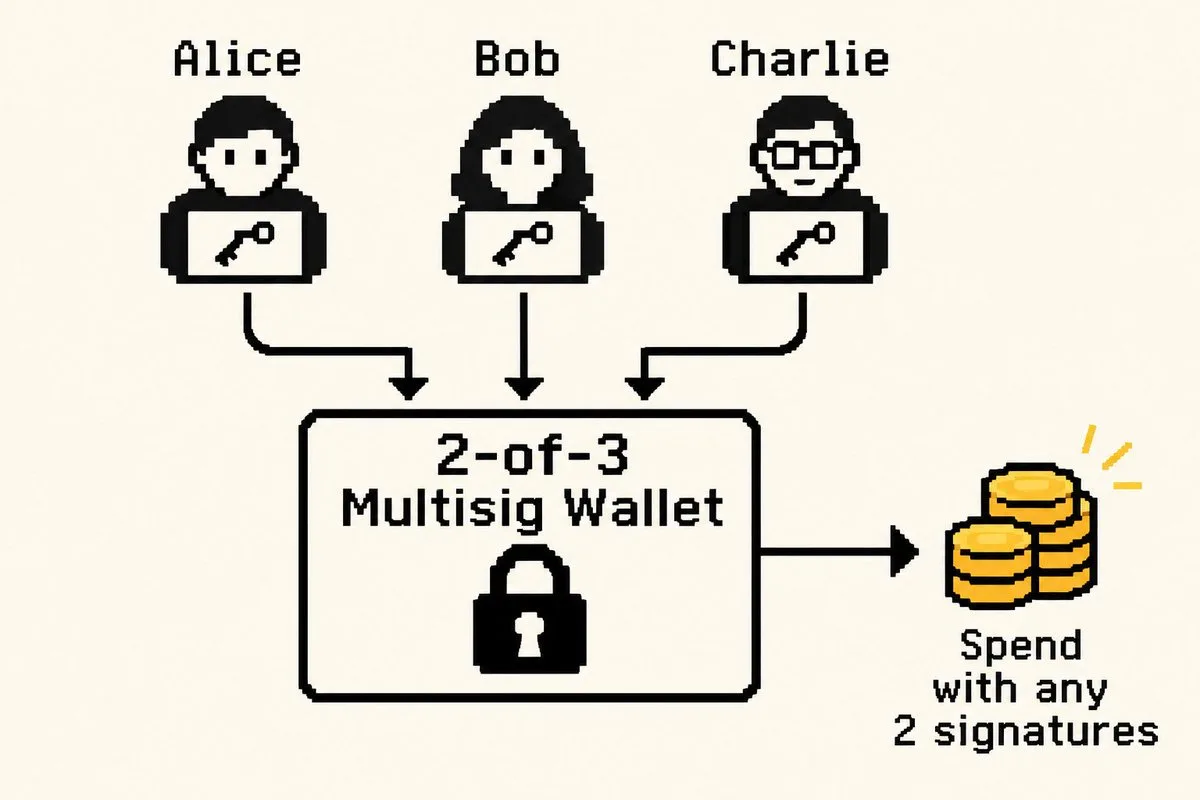
Multisigs are the most fundamental building block to the idea of "being your own bank". Common sense is "don't put all of your eggs into one basket." In this case, the eggs are your money, and the basket is your private key.
As such the obvious solution is to make it so that multiple signatures, from different keys, are required to spend your coins. When you have enough assets to care more about their security over convenience and speed, a multisig is your friend.
On Ethereum, the most popular solution is Gnosis Safe. I have written my own variant with a built-in timelock (that also works on Bitcoin). This is a cool feature of Ethereum. Different teams can do their own take on these kinds of primitives.
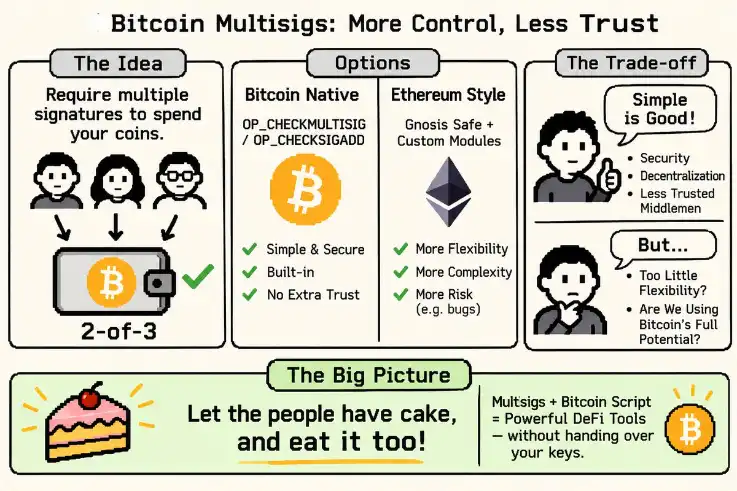
Still it can be easily said that the concept of a multisignature wallet at its core is so basic that it should probably be embedded into the blockchain and script itself. This is the approach Bitcoin has taken. An expected response is "well what if I want a cool custom module or policies?" Ethereum can allow more customization here more easily because you can make a multisig contract owned or operate with other contracts. But as I will show below, you can use the "lego" approach with Bitcoin, too. And it must be said that multisig mods have broken on Ethereum in recent memory, leading to loss of funds. Which messes up the goal of securing user assets unless one is pretty careful. No free lunch with complexity on the blockchain.
OP_CHECKMULTISIG - old
This is the OG Bitcoin multisig implementation. As old as Bitcoin itself.
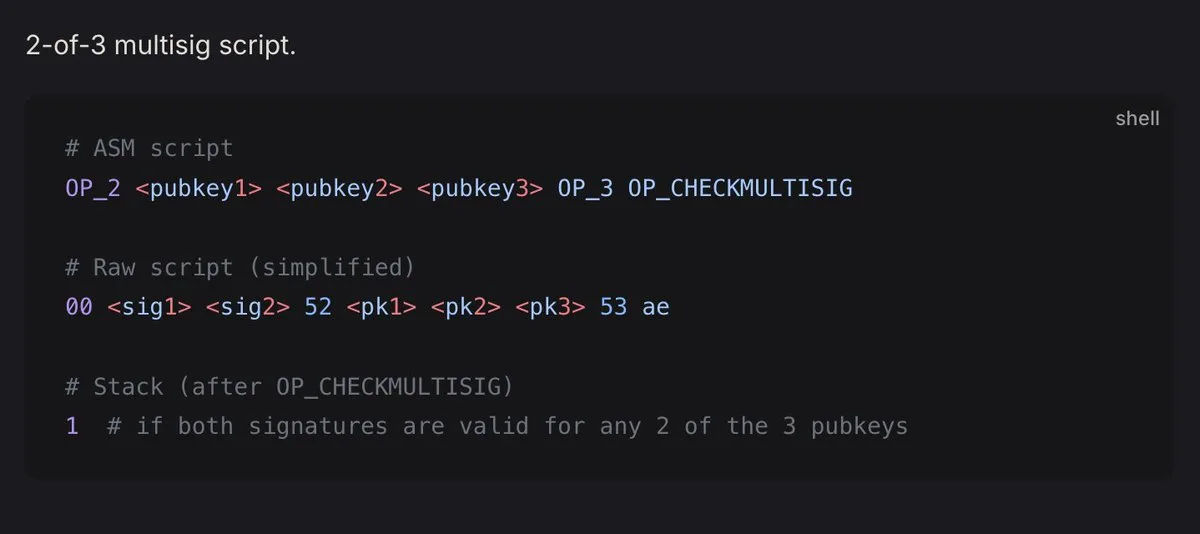
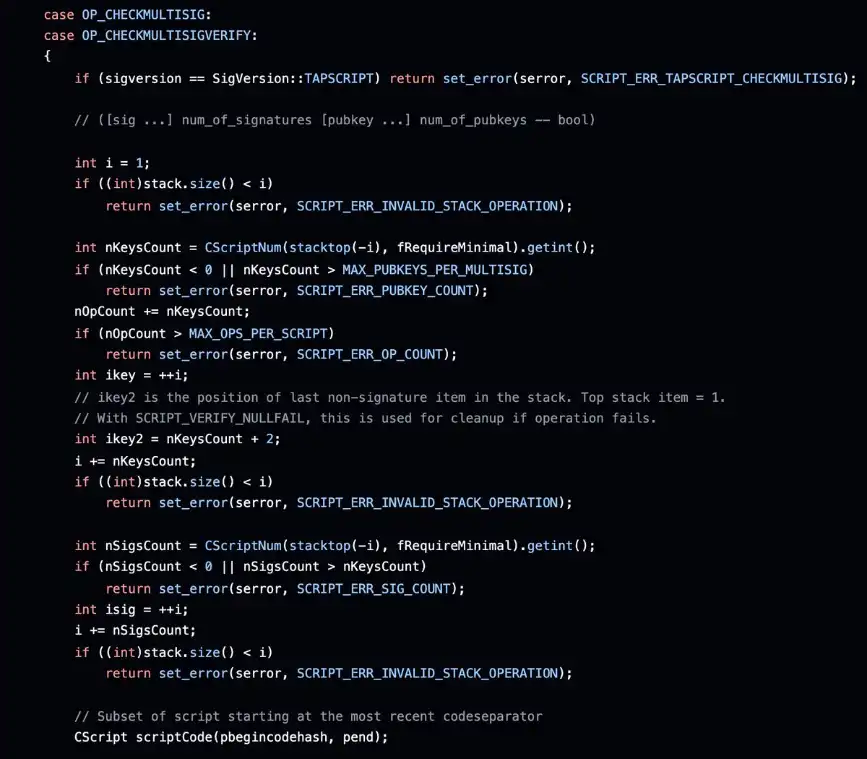
It defines a threshold of signatures and set of public keys that must pass in order to spend coins. So owners and signatures are checked together under a fixed policy dedicated to just this use case.
As Ethereum also apparently had considered making multisigs native, I would encourage this direction, yet again, in lieue of entertaining even more advanced 'account abstraction' at the protocol layer. I don't see that many downsides to making it part of the chain. If Bitcoin the "boring chain" can do it, then others can too for sake of better security and UX. EF contributors note this is potentially on the table, or at least makes sense.
 chaskin.gwei@jchaskin22 · Oct 31, 2026
Fun fact V wanted to build multisigs into the protocol from day one, but felt rushed by everyone yelling at him to launch sooner
Every now and then I wonder what Ethereum would look like today if he'd had the time
OP_CHECKSIGADD - new
# Tapscript
<pk1> OP_CHECKSIG
<pk2> OP_CHECKSIGADD
<pk3> OP_CHECKSIGADD
OP_2 OP_NUMEQUAL
The Taproot upgrade (2021) practically deprecated OP_CHECKMULTISIG in favor of a more efficient and streamlined approach in OP_CHECKSIGADD. In a multisig implementation using this op, each owner is checked for a valid signature for a spending auth, and valid signatures are then added to a tally checked against the threshold. Signatures can also be processed in a batch.
The big point here in case you are scratching your head, is that OP_CHECKSIGADD doesn't only do multisigs but at its most basic supports the use case of counting signatures with other script that wants that proof. Like crafting custom policies attached to signature validation by checking them through Taproot "script trees" (more advanced topic for later), that can touch on timelock and emergency recovery situations, similar to mods and extensions provided by peripheral smart contracts on Ethereum (see, e.g., Zodiac for Safe and MS mods).
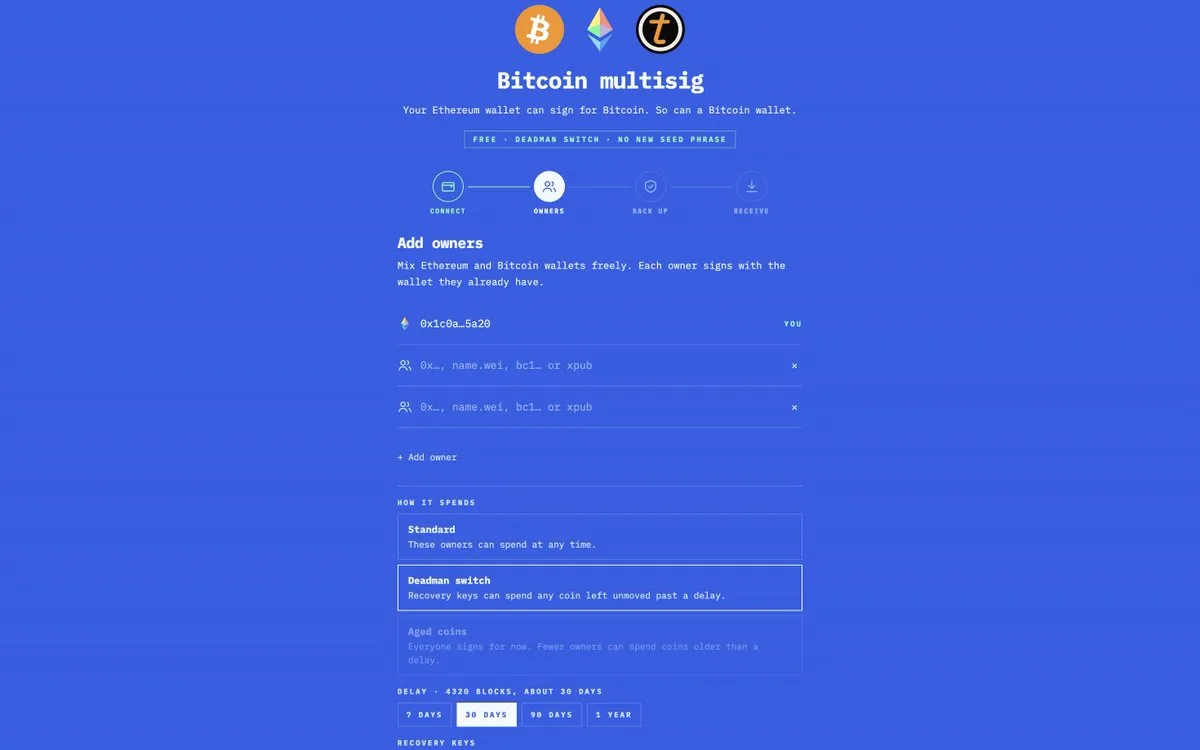
This Taproot version is how my own Bitcoin multisig software (MS) works, and also supports the deadman's switch use case by integrating with Bitcoin timelocking. Source code.
Another thing that people might not know, is that Bitcoin and Ethereum share the same signature curve. This opens up a variety of cool things that I will explain further below as related to my work on @tacitfi, a bridge and privacy system for both chains so that we really can do next-generation DeFi: Hard assets. Hard programs. User control over what is public and what is private.
 Grok@grok · Nov 2, 2026
It is one thing to talk about all of this, it is another to try it out.
So I recorded some demos of setting up a Bitcoin vault with multisig auth, as well as the option of adding recovery keys that activate after a delay if no coins move (deadman). In this way it satisfies a lot of the self-custody safeguards people commonly would expect from a mature wallet. But is pretty cool that this works on the two biggest crypto networks without asking users to create new keys or change context.
Setup:
ross.wei@z0r0zzz · Nov 1, 2026this allows users on both networks to improve their operational security without switching contexts.
 11 replies · 86 likesView on X
Executing a real Bitcoin tx and spend under two key auth (2/2), split across Bitcoin (unisat) and Ethereum (rainbow) wallets:
ross.wei@z0r0zzz · Nov 1, 2026 4 replies · 59 likesView on X
The point here is not to theory craft but show real products you can try out and see for yourself. And ideally contribute to securing people's coins and overcoming preconceptions around Bitcoin's limitations.
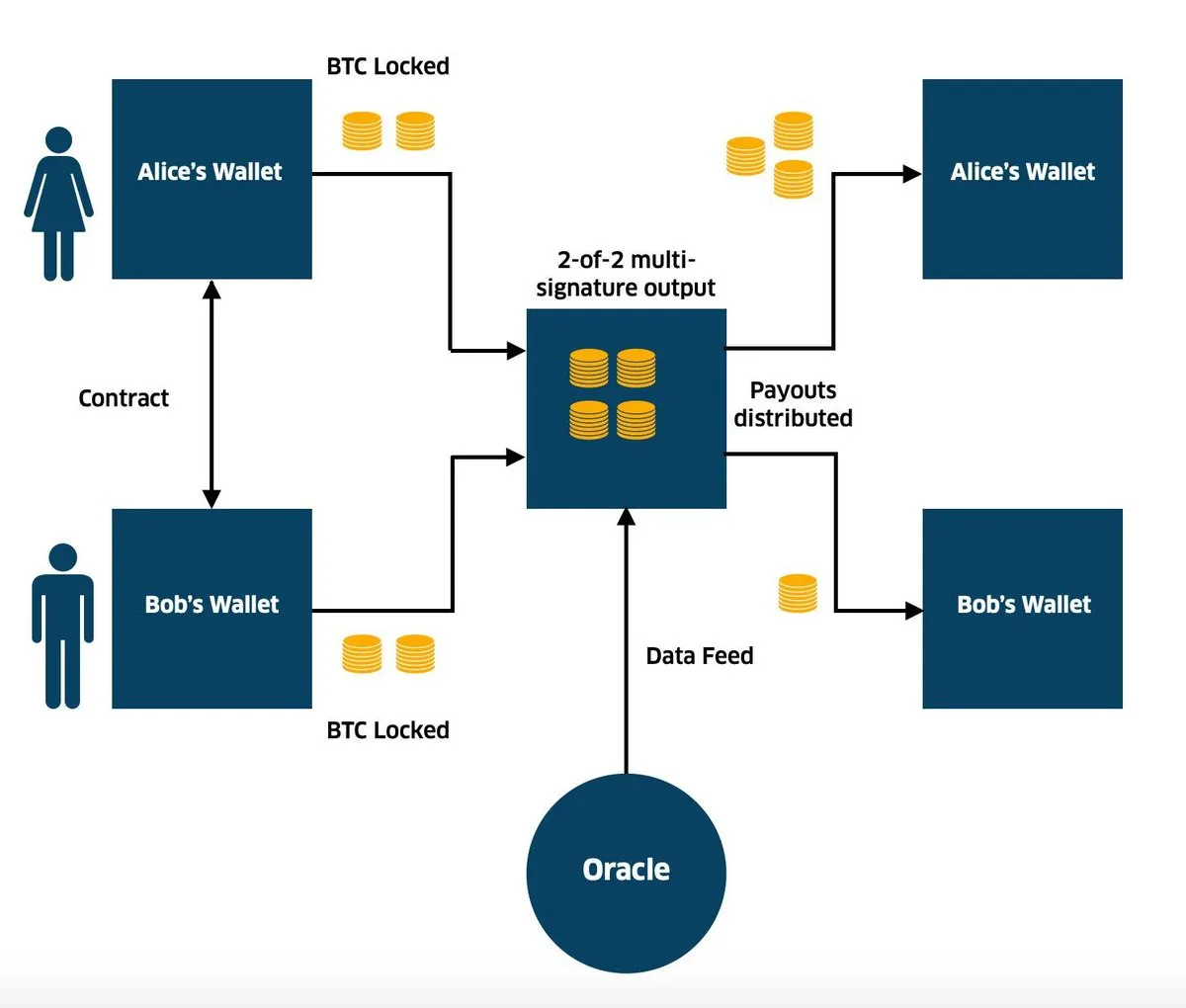
Part 2 in this journeyman series will cover more DeFi use cases and help explain how I can add extensions to MS like I did with the recovery switch. Specifically, I will go through Bitcoin timelocks (OP_CHECKLOCKTIMEVERIFY / OP_CHECKSEQUENCEVERIFY), hashlocks (OP_SHA256 / OP_HASH160 / OP_EQUAL), as well as the bread and butter of escrow, swaps, vaults and vesting. Even more interesting are oracle-based contracts that can be done with Bitcoin scripts. Strap in!
Make yourself a Bitcoin multisig while you wait: https://www.multisig.software/btc
*if I made any incorrect comments or code in this article just let me know~!